
Building a 21st Century Tristan Fishing Factory
This is a top to bottom page - to go to the Latest News Bulletin or scan from the beginning below ... |
Tristan da Cunha's Fishing Factory was gutted by fire on the night of 12th / 13th February 2008 |
| 1st Factory destroyed by lava - 2nd Factory destroyed by fire The original fishing factory, situated on Big Beach was totally destroyed by the lava flow from the 1961 volcanic eruption. The modern factory was built on a plateau above the new Calshot Harbour in 1965 and opened in time for for the first fishing day on 23rd May 1966. See pictures and information on the factory in our Background of the Fishing Factory Feature below and also on our Fishing and Fishing News pages for more about Tristan's Fishing Industry. |
|
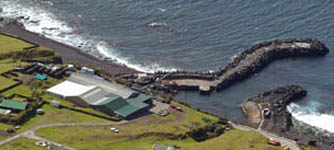
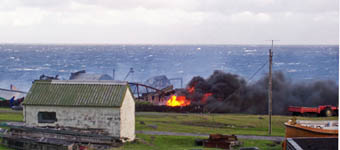
Building a 21st Century Tristan da Cunha Fishing Factory |
|
Factory Building Update Tristan Da Cunha New Factory
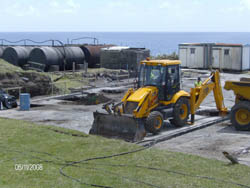
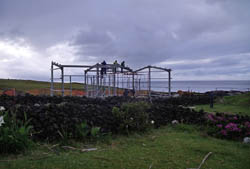
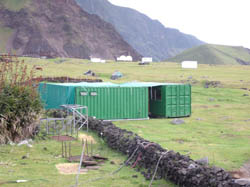
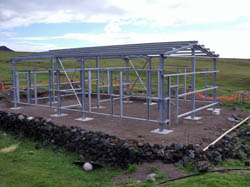
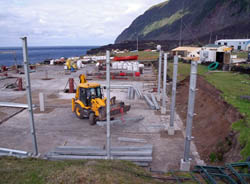
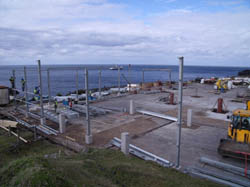
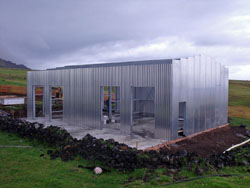
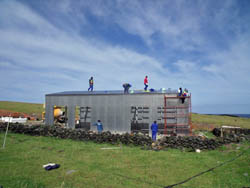
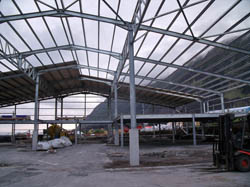
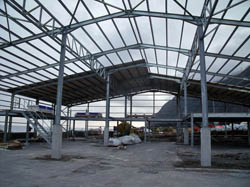
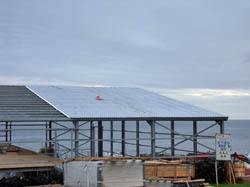
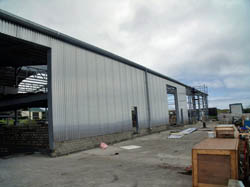
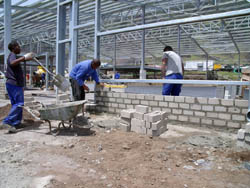
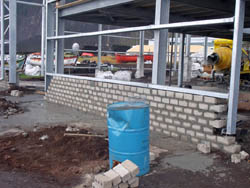
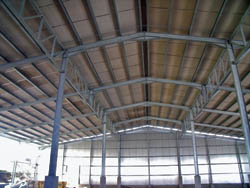
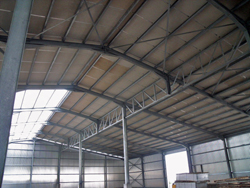
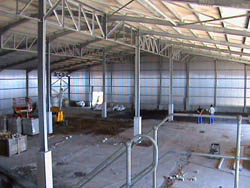
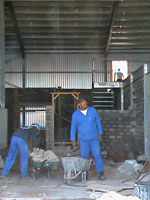
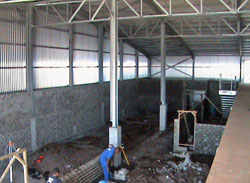
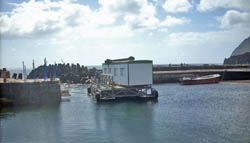
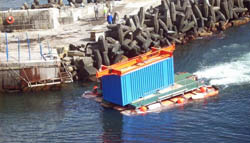
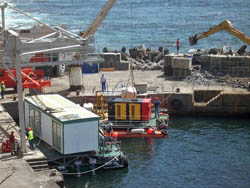
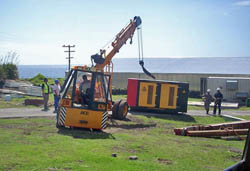
New Factory Design The new factory will be considerably simpler in layout and far more efficient from a processing perspective. The factory is designed to be EU compliant in consultation with the SABS (subject to the Government putting in place the regulatory infrastructure the fish product from the factory should then gain access to EU markets). The factory and power plant structures have been designed with Tristan’s environment in mind. They have been designed to withstand wind forces of 100 knots and seismic events up to 7.5 on the Richter Scale. The company have designed very sturdy, fit for the purpose, buildings that will serve the Island and lobster operation for many years to come – well beyond Ovenstone’s current horizon of 2016. We look forward to being able to utilise the buildings for some time to come! Anchor Steel Anchor Steel is a specialist steel construction company with a relatively small highly skilled team well suited to offshore building erection, fast track projects and the capability of steel erection without large on-site cranes. Previous projects have included those across Africa, UK and Saudi Arabia. • Power Plant Status ~ The following plant and materials have been ordered: These initial orders have been placed due to repeated and dramatic price increases for these items. For instance steel prices have increased by more than 32 % in 2008. Similarly, due to the electricity generation shortfall in South Africa , generator prices have increased 50 % in the last year. Schedule The recent run of very poor weather at Tristan has also pushed out the Edinburgh dry dock. This may influence this vessel’s schedule in June and August, although Ovenstones will do what they can to mitigate this. All the above considered, the rebuilding schedule has been pushed out for a spring start in September/October, rather than in July 2008. The objective remains to have the factory commissioned and ready for operation for the start of the 2009/10 season on 1 July 2009, but everyone must be made aware that there is a significant risk that this target deadline may not be met due to the logistical challenges caused by the loss of the crane. The Power Plant is planned to be commissioned during the 4 th quarter of 2008, subject, again, to there being a crane facility to lift the heavy items (gen sets) ashore, that are in excess of the company crane lift capacity. The project to design and replace the Government crane is being run in parallel with the Factory rebuilding project. Both Ovenstone and project managers are using their best endeavours to assist the Tristan Government to replace the crane within the envisaged rebuild time frame. |
|
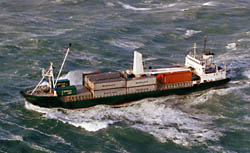
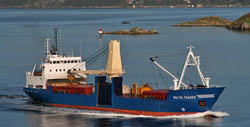
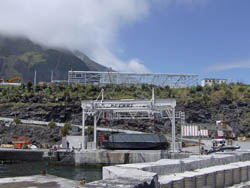
| Andrew James from Ovenstones confirmed on 10th October 2008 that the 1800 tonne ship MV Baltic Trader had been secured to provide the essential transport of personnel and cargo for the fishing factory rebuild. See full statement and details of the ship on the Shipping News Page. In addition the ship will bring a new heavy duty crane and may be involved in shipping materials for the next phase of the harbour refurbishment - See the Calshot Harbour News Page. In an upbeat announcement Andrew James concludes : Despite the lengthy search for a suitable vessel, and various other challenges that Ovenstone and The Apple Group have faced, I remain confident that all the civil and engineering work planned for the 2008/09 summer season can be completed on schedule and that we can enjoy a factory opening ceremony when the Governor visits in April 2009. Watch this space for images and news of the rebuilding of the Tristan da Cunha Fishing Factory as it happens. |
| ||||||
| ||||||||||||||
| |||||
| ||||||||||||||||||||||||||||||
| |||||||||||
| |||||||||||
| |||||||||||
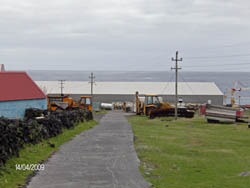
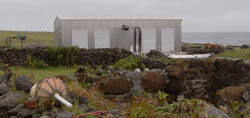
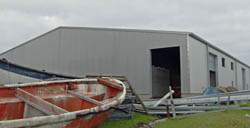
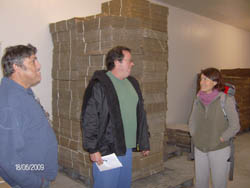
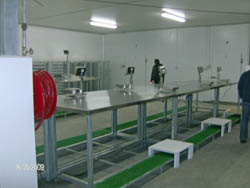
Update from David Morley on 27th April 2009 Work continues and we are on track to be operating in time for the fishing season, even if some fine points won't be yet in place. Erik Mackenzie, Factory Manager, returns on the MV Edinburgh, due to arrive on Friday 1st May. | |||||||||||
| ||||||||||||||||||||||||||||||||
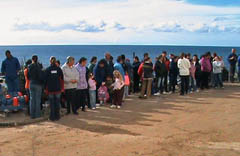
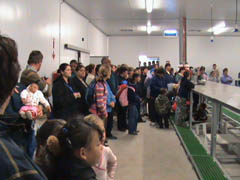

The importance of Fishing to Tristan's Economy | |||
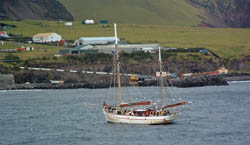 |
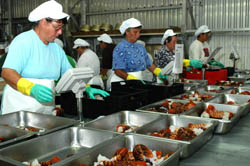
Left : The fish processing factory situated above Calshot Harbour and linked by Puma Road Right: All hands - Many Islanders have full-time or part-time employment in the factory which is the mainstay of the local economy. |
 |